Christmas Tree Carrying Truck Redwork
A Designer’s First Look: Charm with Clear Intent
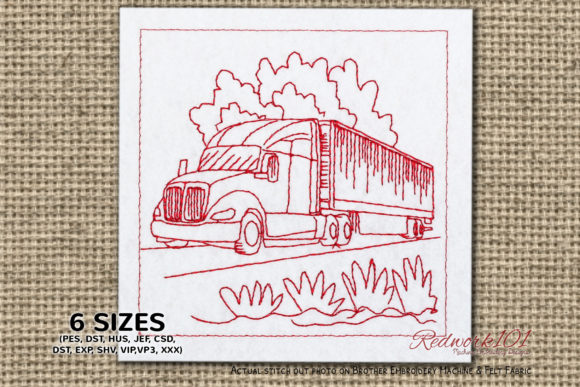
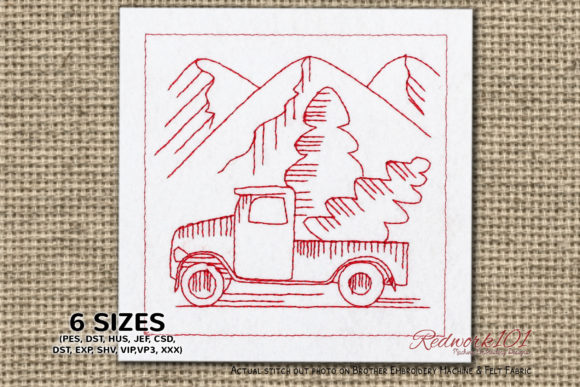
When Christmas Tree Carrying Truck Redwork landed in my inbox, I paused—not because it’s flashy, but because it’s quietly confident. It’s a redwork-style machine embroidery design centered on a friendly truck hauling two slender evergreens. No snowflakes, no glittery text, no forced whimsy. Just clean lines, purposeful spacing, and that unmistakable redwork warmth: bold outlines, minimal fill, and storytelling in silhouette. It feels like a design made for real life—not just holiday decor, but handmade products with personality.
Where This Design Lives Best (and Why)
I tested Christmas Tree Carrying Truck Redwork on a natural canvas tote bag first—no lining, medium-weight cotton duck, medium-stabilizer backing. The result? Instant charm. The truck’s profile reads clearly at 4.2 inches wide; the trees have enough height to suggest movement without crowding. It’s ideal for custom apparel where subtlety wins: think crewneck sweatshirts for local tree farms, baby onesies for holiday photo sessions, or aprons for small-batch bakeries launching seasonal treats. As an embroidered patch, it holds up beautifully—especially when fused onto denim jackets or canvas backpacks. For Etsy sellers, this is a quiet standout: not overdesigned, but instantly recognizable as *holiday* and *handmade*.
Why It Works for Small Business & Gift Markets
- Visual clarity at scale: The design avoids fine interior details—no tiny ornaments or leaf veins—so it stitches cleanly even at 3.5 inches, making it versatile for caps, tea towels, and pillow covers.
- Emotional resonance: Customers connect with nostalgic transportation motifs—especially during the holidays. A truck carrying trees implies journey, preparation, tradition. That subtext elevates a simple tote bag into a personalized gift.
- Brand-friendly neutrality: Because it’s redwork—not cartoonish or overly stylized—it fits seamlessly into boutique branding: rustic kitchen shops, indie nurseries, or family-run Christmas markets.
Where to Proceed Thoughtfully
This isn’t a “set and forget” design—and that’s a good thing. Its strength lies in intentionality, not universality. Here’s where attention matters:
- Small hoop sizes: Below 3.75 inches wide, the truck’s cab and wheel details start to compress. If you’re embroidering on baby hats or toddler socks, confirm the smallest recommended size before digitizing adjustments.
- Textured or stretchy fabrics: On terry cloth towels or lightweight knits, use cutaway stabilizer + basting stitch. Redwork relies on crisp edges—any fabric movement blurs the outline.
- Dark or dense backgrounds: Redwork traditionally uses red thread on white/light fabric. If stitching on navy or charcoal, test contrast first. Some versions may include optional satin-stitch accents—verify whether those are part of the core file or add-ons.
- Curved surfaces (like caps): The horizontal layout works well on front panels, but avoid placing it too high on a curved crown—the trees may distort. Center it low and wide for best legibility.
Design Integrity in Real-World Use
What sets Christmas Tree Carrying Truck Redwork apart isn’t novelty—it’s coherence. As a designer reviewing embroidery files for client work, I notice how rarely a Transportation-themed design balances simplicity and narrative so well. It doesn’t compete with the garment; it complements it. On a cream linen tea towel? Warm and grounded. On a charcoal fleece blanket? Unexpected but cohesive. That balance directly affects customer trust: buyers sense craftsmanship, not clipart.
For craft business owners, this translates to perceived value. A finished product featuring Christmas Tree Carrying Truck Redwork reads as intentional—not generic holiday filler. That matters for Etsy listings (where thumbnail clarity and story-driven titles boost engagement) and craft fairs (where shoppers pause for authenticity, not busyness).
Practical Designer Notes Before You Stitch
- Always test on scrap fabric matching your final substrate—especially if using textured weaves or blends.
- Check thread color contrast in both natural and artificial light. Redwork loses impact if the red thread fades against off-white or ecru fabric.
- Review stitch density—not just for speed, but for wash durability. High-density fill areas (like truck beds) need stronger stabilizer than open-outline sections.
- Confirm hoop size compatibility before prepping production runs. If your standard hoop is 4x4, verify the design fits comfortably with margin.
- Inspect corners and curves in your embroidery software. Redwork relies on smooth satin-stitch outlines—jagged vector points translate to uneven stitching.
- Test black-and-white mockups to assess silhouette strength. If it reads well in grayscale, it’ll hold up across fabric colors and lighting conditions.
- Verify licensing before selling finished items or bundling the digital embroidery file. Commercial use rights aren’t implied—even for redwork.
Final Thought: A Design That Earns Its Place
Christmas Tree Carrying Truck Redwork won’t shout from a crowded shelf—but it will make someone smile while unzipping their tote, adjusting their apron, or folding a freshly embroidered kitchen towel. It’s the kind of embroidery file that supports your craft business without overshadowing your voice. Whether you’re an Etsy seller curating cozy holiday collections, a small shop owner refreshing seasonal merchandise, or a designer building a library of reliable design assets, this one earns its spot—not because it’s trendy, but because it’s thoughtfully built for real stitching, real fabrics, and real people who appreciate handmade meaning.