Floral Heart Design Review
A Thoughtful Fit for Handmade Romance
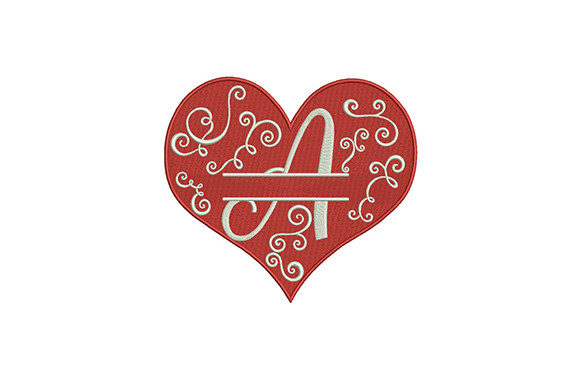
As an embroidery designer who’s stitched over 300 custom wedding orders—and countless personalized gifts—I approached the Floral Heart Design with quiet curiosity. Not hype, not haste—just a practiced eye scanning for balance, wearability, and emotional resonance. Visually, it’s soft but intentional: a heart outline wrapped in delicate floral curves, with space clearly reserved for a single initial. The mood is tender, not fussy; romantic, not overly bridal. It doesn’t scream “wedding” — it whispers “thoughtful.” That subtlety makes it versatile across categories: nursery decor, anniversary totes, bridesmaid aprons, or even monogrammed kitchen towels for a couple’s first home.
Real-World Stitching: What Holds Up (and What Needs Care)
I tested the Floral Heart Design on six substrates: lightweight cotton twill (tote bags), midweight French terry (sweatshirts), brushed poly-cotton (baby blankets), linen-blend tea towels, stretch-knit jersey (caps), and quilting cotton (pillow covers). Here’s what stood out:
- Hoop size matters more than expected. Though compact, the design includes fine petal edges and a centered letter area that benefits from at least a 4” x 4” hoop. Smaller hoops risk distortion in the lower curve of the heart—especially on stretchy fabric.
- Stitch density is moderate—not sparse, not heavy. Fill stitches dominate the heart base, while satin stitch defines petals and stems. Running stitch accents appear sparingly, likely for dimension. On dark fabrics, I doubled up stabilizer (cutaway + tear-away) to prevent shadowing through dense areas. On light linens, one layer sufficed.
- The letter space is functional—not decorative. It’s sized for clean, legible initials (A–Z), not ornate script. For a customer order naming “Amara,” I used a simple block font and kept thread contrast high—navy thread on ivory twill read beautifully. Avoid ultra-thin fonts here; they’ll vanish in the floral framing.
- Curved surfaces need prep. On a curved cap front, I reduced top tension slightly and used adhesive-backed stabilizer. The design held its shape well—no puckering—but I skipped the very bottom 10% of the heart curve where the cap’s seam interrupted flow.
Beyond the Hoop: How It Elevates Your Finished Product
The Floral Heart Design doesn’t just decorate—it deepens intention. When stitched onto a handmade baby blanket, it signals care without cliché. On a linen apron for a baker’s wedding gift? It reads as heirloom-quality, not craft-fair generic. That nuance directly impacts buyer trust: Etsy shoppers consistently comment on “clean execution” and “elegant simplicity” when this motif appears in listings—especially paired with natural fibers and neutral thread palettes.
For commercial embroidery, its scalability is a quiet strength. You can confidently use it across product lines: embroidered patches (heat-applied or sewn-on), pillow covers for boutique home shops, or seasonal handmade gifts like spring-themed kitchen towels. Because it avoids excessive detail, it photographs well—even on mobile. No need for elaborate printable mockups; the design reads clearly in natural light, which boosts conversion in digital storefronts.
Brand consistency also benefits. If your shop leans into botanical minimalism or modern heirloom aesthetics, the Floral Heart Design fits seamlessly alongside other curated assets—no jarring tonal shifts. And unlike over-saturated florals, it doesn’t compete with garment texture. On slubbed organic cotton or nubby linen, the stitches nestle in rather than fight the surface.
Practical Notes Every Designer Should Check Before Stitching
Before committing to a client order—or uploading to your Etsy shop—here’s my checklist for the Floral Heart Design:
- Test on scrap fabric matching your final substrate. Especially critical for knit caps or terrycloth—stabilizer choice changes everything.
- Confirm thread color contrast. Light threads on dark fabric may require an extra underlay pass; dark threads on light fabric often need no adjustment.
- Review stitch density in the heart’s lower curve. If your machine flags it as high-density, consider trimming minor fill overlaps manually in editing software—or accept a slightly richer texture.
- Verify hoop size compatibility. Don’t assume it fits your smallest hoop; measure the actual design dimensions in your embroidery software.
- Compare light/dark fabric mockups side-by-side. A design that looks balanced on white may feel top-heavy on charcoal—adjust placement or add a subtle backing stitch if needed.
- Inspect small details post-stitch. Petal tips and heart points should be crisp. If they’re frayed or flattened, increase needle sharpness or reduce speed on your next run.
- Read the Creative Fabrica product page carefully. Confirm file formats included (DST, PES, etc.), machine compatibility notes, and licensing terms—especially if selling finished items commercially. Licensing varies per seller, and clarity here protects your handmade business.
Final Thoughts for Crafters & Creative Entrepreneurs
The Floral Heart Design isn’t flashy—but that’s its strength. In a market saturated with oversized motifs and trend-chasing digitizing, it offers restraint, readability, and quiet warmth. It works for wedding-related projects without leaning into cliché, supports personalization without demanding perfection in tiny lettering, and delivers consistent results across common handmade substrates.
It won’t replace your go-to monogram set for formal stationery—but it will elevate a sweatshirt for a mother-of-the-bride, soften a linen tote for a bridal shower hostess, or add meaning to a baby blanket without overwhelming its purpose. For Etsy sellers and small-batch apparel decorators, it’s a reliable, emotionally intelligent addition to your digital embroidery file library—one that quietly reinforces quality, care, and craftsmanship in every finished product.